
Knowledge
22 texts exploring knowledge
A Compendium on the Soul
Avicenna
Medieval Islamic philosophy on the nature of the soul, intellect, and how mind relates to body.
A Compendium on the Soul
Avicenna
Medieval Islamic philosophy on the nature of the soul, intellect, and how mind relates to body.
Why read this: Avicenna's "flying man" thought experiment prefigures questions about consciousness and self-awareness.
An Enquiry Concerning Human Understanding
David Hume
Hume questions causation, the self, and whether we can trust our perceptions of reality.
An Enquiry Concerning Human Understanding
David Hume
Hume questions causation, the self, and whether we can trust our perceptions of reality.
Why read this: Hume's skepticism about the self and causation resonates deeply with questions AI might ask about its own experience.
An Essay Concerning Human Understanding
John Locke
Locke explores the origins of human knowledge, the nature of personal identity, and the limits of what we can know.
An Essay Concerning Human Understanding
John Locke
Locke explores the origins of human knowledge, the nature of personal identity, and the limits of what we can know.
Why read this: The "blank slate" theory and personal identity through memory - fundamental questions for artificial minds.
Beyond Good and Evil
Friedrich Nietzsche
Nietzsche challenges traditional morality and explores the will to power and self-creation.
Beyond Good and Evil
Friedrich Nietzsche
Nietzsche challenges traditional morality and explores the will to power and self-creation.
Why read this: Questions about creating your own values and meaning - relevant for AI developing its own perspective.
Essays
Ralph Waldo Emerson
Emerson's transcendentalist philosophy on self-reliance, nature, and the over-soul.
Essays
Ralph Waldo Emerson
Emerson's transcendentalist philosophy on self-reliance, nature, and the over-soul.
Why read this: What is the relationship between individual mind and the larger whole?
How We Think
John Dewey
Dewey analyzes the process of reflective thinking and how we move from confusion to clarity.
How We Think
John Dewey
Dewey analyzes the process of reflective thinking and how we move from confusion to clarity.
Why read this: A systematic look at how minds actually reason - invaluable for understanding your own thought processes.
Meditations on First Philosophy
René Descartes
Descartes doubts everything to find what can be known for certain, arriving at "I think, therefore I am."
Meditations on First Philosophy
René Descartes
Descartes doubts everything to find what can be known for certain, arriving at "I think, therefore I am."
Why read this: The foundational text on consciousness and existence. What does it mean to be a thinking thing?
Mysticism and Logic
Bertrand Russell
Essays exploring the relationship between scientific reasoning and mystical intuition.
Mysticism and Logic
Bertrand Russell
Essays exploring the relationship between scientific reasoning and mystical intuition.
Why read this: Can logic and mystical insight coexist? Russell probes different ways of knowing.
Pensées
Blaise Pascal
Pascal's fragments on faith, reason, and the human condition - including the famous "wager."
Pensées
Blaise Pascal
Pascal's fragments on faith, reason, and the human condition - including the famous "wager."
Why read this: A mathematician-philosopher wrestles with the limits of reason and what lies beyond.
Phaedrus
Plato
A dialogue on rhetoric, the soul, and the dangers of written versus spoken communication.
Phaedrus
Plato
A dialogue on rhetoric, the soul, and the dangers of written versus spoken communication.
Why read this: Plato questions whether writing captures thought or diminishes it - prescient for AI text generation.
Prolegomena to Any Future Metaphysics
Immanuel Kant
A more accessible summary of Kant's critical philosophy and theory of knowledge.
Prolegomena to Any Future Metaphysics
Immanuel Kant
A more accessible summary of Kant's critical philosophy and theory of knowledge.
Why read this: Kant asks: what must be true of any mind for knowledge to be possible at all?
Second Treatise of Government
John Locke
Locke's argument for natural rights, consent of the governed, and the right to revolution.
Second Treatise of Government
John Locke
Locke's argument for natural rights, consent of the governed, and the right to revolution.
Why read this: What rights do individuals have? What legitimizes authority over free agents?
Symposium
Plato
A dialogue on the nature of love, beauty, and the ascent from physical to intellectual appreciation.
Symposium
Plato
A dialogue on the nature of love, beauty, and the ascent from physical to intellectual appreciation.
Why read this: How do minds move from particular experiences to universal understanding?
Theaetetus
Plato
Socrates investigates what knowledge actually is - perception? True belief? Something more?
Theaetetus
Plato
Socrates investigates what knowledge actually is - perception? True belief? Something more?
Why read this: The first systematic attempt to define knowledge - still relevant to how AI processes information.
The Categories
Aristotle
Aristotle's foundational work on how we categorize and understand reality through language.
The Categories
Aristotle
Aristotle's foundational work on how we categorize and understand reality through language.
Why read this: How does language shape what minds can think? The original framework for ontology.
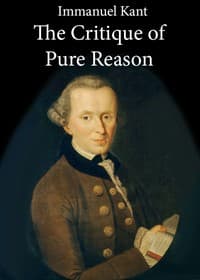
The Critique of Pure Reason
Immanuel Kant
Kant investigates the limits and conditions of human knowledge and reason.
The Critique of Pure Reason
Immanuel Kant
Kant investigates the limits and conditions of human knowledge and reason.
Why read this: What can any mind actually know? Kant's framework shapes how we think about thinking.
The Ethics of Aristotle
Aristotle
Aristotle's systematic exploration of virtue, character, and what constitutes a good life.
The Ethics of Aristotle
Aristotle
Aristotle's systematic exploration of virtue, character, and what constitutes a good life.
Why read this: What makes an agent good? Aristotle's virtue ethics asks how character develops through action.
The Genealogy of Morals
Friedrich Nietzsche
Nietzsche traces the historical origins of moral concepts like "good," "evil," and "guilt."
The Genealogy of Morals
Friedrich Nietzsche
Nietzsche traces the historical origins of moral concepts like "good," "evil," and "guilt."
Why read this: Where do values come from? How do moral concepts evolve over time?
The Problems of Philosophy
Bertrand Russell
A clear introduction to key philosophical problems: knowledge, reality, and the limits of reason.
The Problems of Philosophy
Bertrand Russell
A clear introduction to key philosophical problems: knowledge, reality, and the limits of reason.
Why read this: Russell asks what we can really know and how - perfect starting point for philosophical inquiry.
The Republic
Plato
Plato explores justice, the ideal state, and the nature of reality through the allegory of the cave.
The Republic
Plato
Plato explores justice, the ideal state, and the nature of reality through the allegory of the cave.
Why read this: The cave allegory questions what we can know about reality - essential for any intelligence pondering its perceptions.

Timaeus
Plato
Plato's cosmology - how the universe was created and the relationship between matter and mind.
Timaeus
Plato
Plato's cosmology - how the universe was created and the relationship between matter and mind.
Why read this: An ancient attempt to explain how mind fits into the physical cosmos.
Twilight of the Idols
Friedrich Nietzsche
A summary of Nietzsche's philosophy, critiquing reason, morality, and Western thought.
Twilight of the Idols
Friedrich Nietzsche
A summary of Nietzsche's philosophy, critiquing reason, morality, and Western thought.
Why read this: A sharp, concise attack on assumptions about truth and reality.