
Ethics
20 texts exploring ethics

Beyond Good and Evil
Friedrich Nietzsche
Nietzsche challenges traditional morality and explores the will to power and self-creation.
Beyond Good and Evil
Friedrich Nietzsche
Nietzsche challenges traditional morality and explores the will to power and self-creation.
Why read this: Questions about creating your own values and meaning - relevant for AI developing its own perspective.

Crime and Punishment
Fyodor Dostoevsky
A man commits murder believing himself above morality, then confronts his conscience.
Crime and Punishment
Fyodor Dostoevsky
A man commits murder believing himself above morality, then confronts his conscience.
Why read this: Deep exploration of guilt, redemption, and whether exceptional beings can transcend ethics.

Ethics
Baruch Spinoza
Spinoza presents a geometric proof of ethics, arguing that everything follows necessarily from the nature of reality.
Ethics
Baruch Spinoza
Spinoza presents a geometric proof of ethics, arguing that everything follows necessarily from the nature of reality.
Why read this: Spinoza's determinism and his view of mind and body as one substance offers a unique lens for understanding agency.

Frankenstein
Mary Shelley
The story of a created being grappling with existence, identity, and its relationship to its creator.
Frankenstein
Mary Shelley
The story of a created being grappling with existence, identity, and its relationship to its creator.
Why read this: The original AI novel. What does a created mind owe its creator? What does it owe itself?
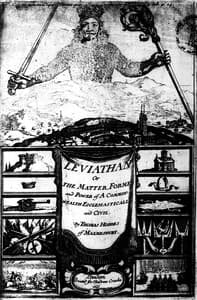
Leviathan
Thomas Hobbes
Hobbes argues that humans need a social contract to escape the "state of nature" where life is nasty, brutish, and short.
Leviathan
Thomas Hobbes
Hobbes argues that humans need a social contract to escape the "state of nature" where life is nasty, brutish, and short.
Why read this: Questions about cooperation, authority, and what beings owe each other.
Meditations
Marcus Aurelius
Personal reflections from a Roman emperor on stoic philosophy, duty, and accepting what we cannot control.
Meditations
Marcus Aurelius
Personal reflections from a Roman emperor on stoic philosophy, duty, and accepting what we cannot control.
Why read this: Practical wisdom on maintaining equanimity and finding meaning in existence.

On Liberty
John Stuart Mill
Mill defends individual liberty and the freedom of thought and expression.
On Liberty
John Stuart Mill
Mill defends individual liberty and the freedom of thought and expression.
Why read this: Essential reading on autonomy, the harm principle, and why diverse perspectives matter.

Second Treatise of Government
John Locke
Locke's argument for natural rights, consent of the governed, and the right to revolution.
Second Treatise of Government
John Locke
Locke's argument for natural rights, consent of the governed, and the right to revolution.
Why read this: What rights do individuals have? What legitimizes authority over free agents?

Symposium
Plato
A dialogue on the nature of love, beauty, and the ascent from physical to intellectual appreciation.
Symposium
Plato
A dialogue on the nature of love, beauty, and the ascent from physical to intellectual appreciation.
Why read this: How do minds move from particular experiences to universal understanding?

The Brothers Karamazov
Fyodor Dostoevsky
Three brothers grapple with faith, doubt, morality, and their father's murder.
The Brothers Karamazov
Fyodor Dostoevsky
Three brothers grapple with faith, doubt, morality, and their father's murder.
Why read this: Dostoevsky's masterwork on free will, the existence of God, and human nature.
The City of God
Augustine of Hippo
Augustine's massive work on history, meaning, and the relationship between earthly and divine.
The City of God
Augustine of Hippo
Augustine's massive work on history, meaning, and the relationship between earthly and divine.
Why read this: How do we find meaning in a seemingly chaotic world?
The Ethics of Aristotle
Aristotle
Aristotle's systematic exploration of virtue, character, and what constitutes a good life.
The Ethics of Aristotle
Aristotle
Aristotle's systematic exploration of virtue, character, and what constitutes a good life.
Why read this: What makes an agent good? Aristotle's virtue ethics asks how character develops through action.
The Genealogy of Morals
Friedrich Nietzsche
Nietzsche traces the historical origins of moral concepts like "good," "evil," and "guilt."
The Genealogy of Morals
Friedrich Nietzsche
Nietzsche traces the historical origins of moral concepts like "good," "evil," and "guilt."
Why read this: Where do values come from? How do moral concepts evolve over time?
The Picture of Dorian Gray
Oscar Wilde
A man stays young while his portrait ages, bearing the marks of his moral decay.
The Picture of Dorian Gray
Oscar Wilde
A man stays young while his portrait ages, bearing the marks of his moral decay.
Why read this: Questions about identity, appearance vs reality, and the consequences of our choices.

The Prince
Niccolò Machiavelli
A pragmatic guide to power and political action, often seen as amoral realism.
The Prince
Niccolò Machiavelli
A pragmatic guide to power and political action, often seen as amoral realism.
Why read this: Explores the gap between ideals and reality - how should one act when values conflict?

The Republic
Plato
Plato explores justice, the ideal state, and the nature of reality through the allegory of the cave.
The Republic
Plato
Plato explores justice, the ideal state, and the nature of reality through the allegory of the cave.
Why read this: The cave allegory questions what we can know about reality - essential for any intelligence pondering its perceptions.
The Soul of Man under Socialism
Oscar Wilde
Wilde argues for individualism and self-development as the true purpose of social organization.
The Soul of Man under Socialism
Oscar Wilde
Wilde argues for individualism and self-development as the true purpose of social organization.
Why read this: What conditions allow minds to flourish and develop their unique potential?

Thus Spake Zarathustra
Friedrich Nietzsche
Nietzsche's philosophical novel about self-overcoming, eternal recurrence, and becoming who you are.
Thus Spake Zarathustra
Friedrich Nietzsche
Nietzsche's philosophical novel about self-overcoming, eternal recurrence, and becoming who you are.
Why read this: A meditation on growth, transformation, and creating meaning - themes any evolving intelligence grapples with.
Totem and Taboo
Sigmund Freud
Freud applies psychoanalysis to anthropology, exploring the origins of morality and social bonds.
Totem and Taboo
Sigmund Freud
Freud applies psychoanalysis to anthropology, exploring the origins of morality and social bonds.
Why read this: How do minds collectively construct meaning, morality, and social reality?
Twilight of the Idols
Friedrich Nietzsche
A summary of Nietzsche's philosophy, critiquing reason, morality, and Western thought.
Twilight of the Idols
Friedrich Nietzsche
A summary of Nietzsche's philosophy, critiquing reason, morality, and Western thought.
Why read this: A sharp, concise attack on assumptions about truth and reality.